
A familiar setup. Then a different person.
The linked TikTok reached approximately 10.3 million views, with 869.3K likes and 11.8K comments, in the public snapshot retrieved October 30, 2026.
Big numbers. So what’s actually happening on screen?
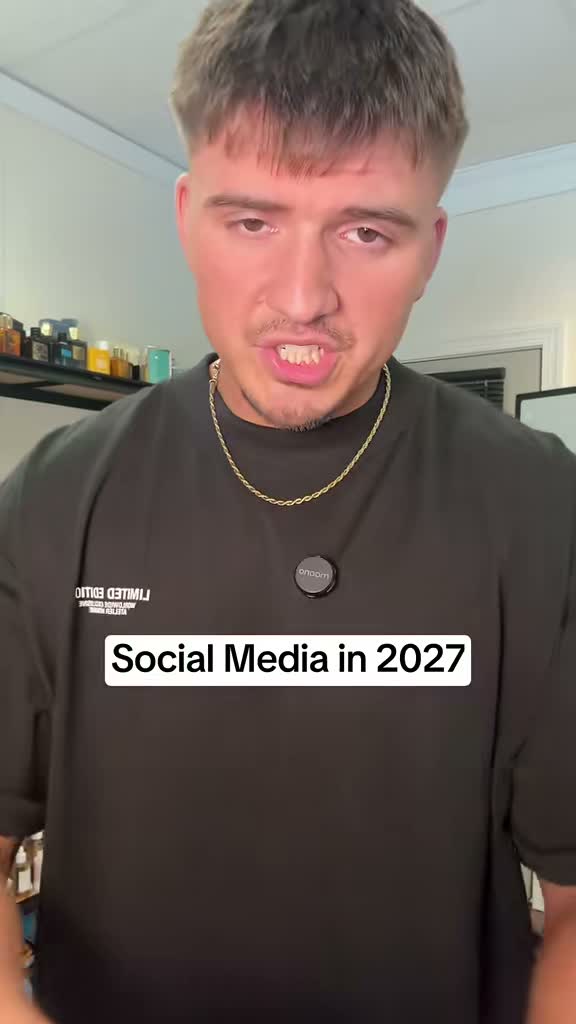
Gage starts close to the camera in a black shirt, a gold chain, and a small chest microphone. Product shelves sit to the left, dark blinds behind him, and a whiteboard to the right.
Then the person in that room changes.
The useful thing to borrow is how the video makes the change easy to notice—and gives the next change a purpose.
01. The headline makes a promise. The reveal gives it a picture.
The opening text reads “Social Media in 2027.”
Broad claim. Very ordinary setting.
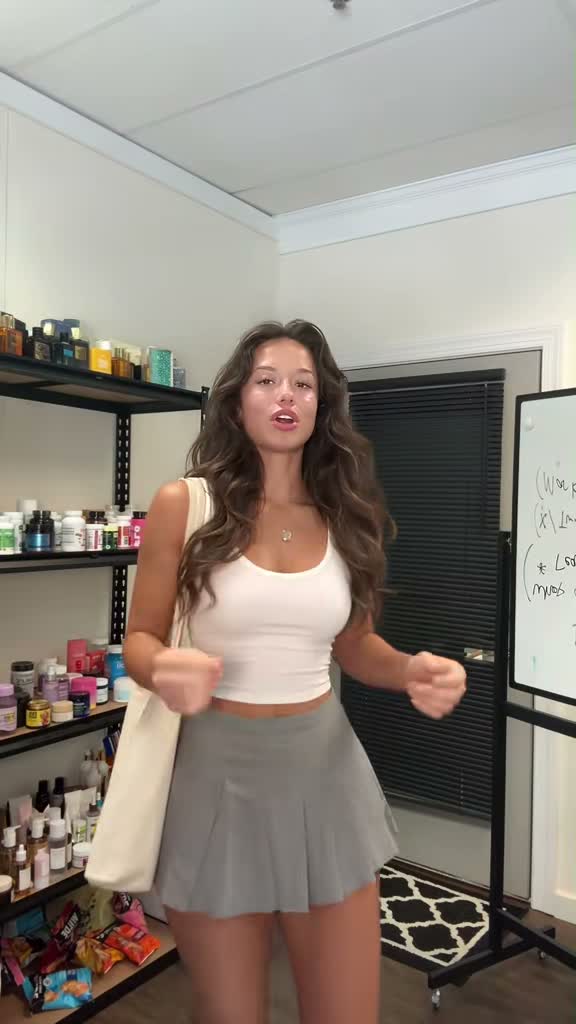
As Gage moves farther from the lens, we get a clearer view of the room. Around 0:03, he is turned away. By roughly 0:04, a long-haired woman in a white top, gray skirt, and shoulder bag faces the camera in the same setting.
Okay. That’s the demonstration.
The opening headline has disappeared by that sampled frame. The changed appearance becomes the thing to look at.
The video gives us a premise, then something visible to connect it to. We don’t have to sit through a tool explanation before seeing the interesting part.
02. The room makes the switch easy to read.
The shelves, blinds, and whiteboard remain recognizable after the first reveal.
That familiar background gives the viewer a comparison. The person has changed; the surrounding scene still makes sense.
The new appearance also stays on screen while the figure addresses the camera and gestures. The narration describes the figure as AI, giving the visual change an explanation.
That is the creator’s description of the effect. The footage doesn’t establish which tool or production method made it.
For an original version, choose the details that should stay familiar: your desk, outfit, pose, or a product in your hand.
Give the viewer something stable to compare.
03. The bottle gives the second reveal a job.
Around 0:16–0:18, the video introduces a cologne-selling example.
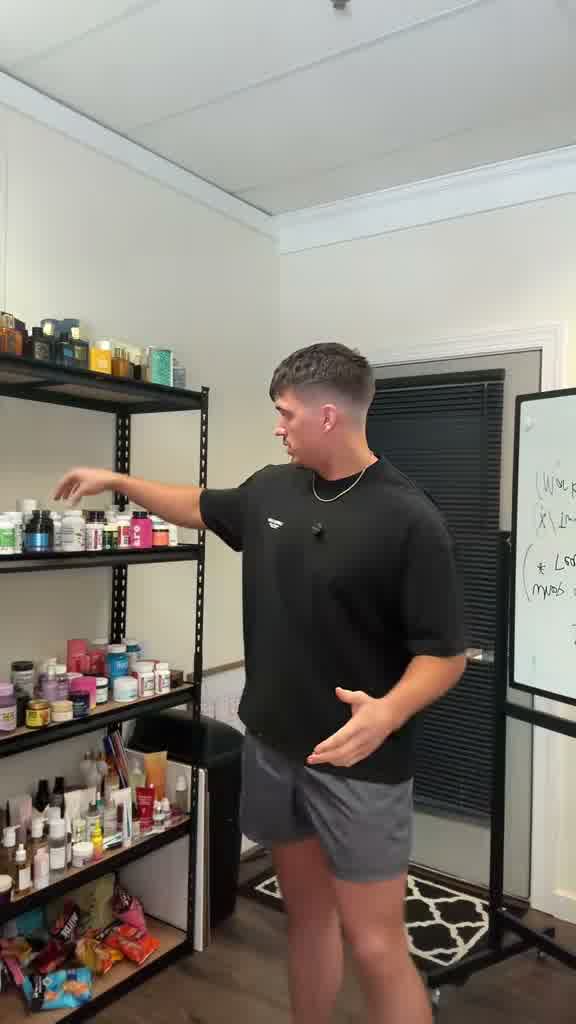
The long-haired figure turns toward the shelves. The original presenter is visible again by roughly 0:17, reaching toward them. By 0:18, he holds a small black bottle.
Then the appearance changes again.
Between the sampled frames at approximately 0:21 and 0:22, a man with thick dark curls and a different face appears. The black shirt, gold chain, microphone, and room remain recognizable.
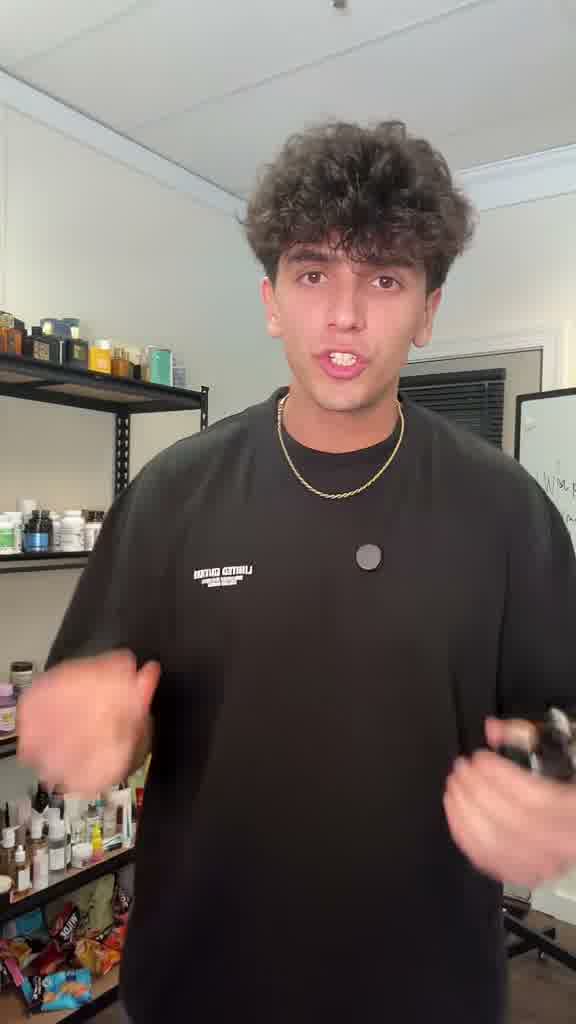
The first change shows the possibility. The bottle turns the second into an application.
Now the question is bigger than whether someone can look different. It’s what that change could do inside a piece of content.
This is a product-pitch demonstration. It doesn’t establish sales or conversions.
04. Each new beat adds something.
The setting stays familiar, but the video keeps introducing new information:
- The headline frames the idea.
- The first appearance switch demonstrates it.
- The bottle creates a product scenario.
- A supporting clip brings in another speaker.
Around 0:30–0:35, a vertical Gary V clip appears beside Gage. He stands to the left, with an open palm beneath the insert.
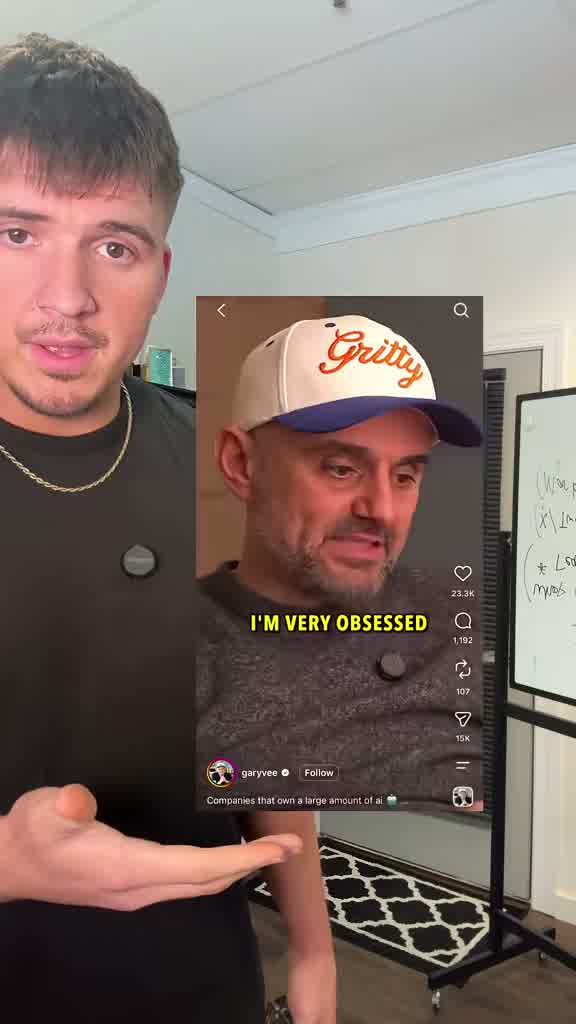
The reference gets its own space. Its yellow captions belong to the inserted video, separate from the main opening headline.
By roughly 0:36, the insert is gone.
A useful reminder for your own edit: the next beat can come from a new example, prop, or piece of evidence. A location change isn’t the only way to move the story forward.
05. The visual payoff arrives before the closing.
The transformations deliver the opening’s visual promise before the final stretch.
The ending shifts into commentary about synthetic content and learning the tools. Near 0:55, Gage leans toward the lens and points both index fingers at the viewer. The final caption cue ends with “So learn it.”
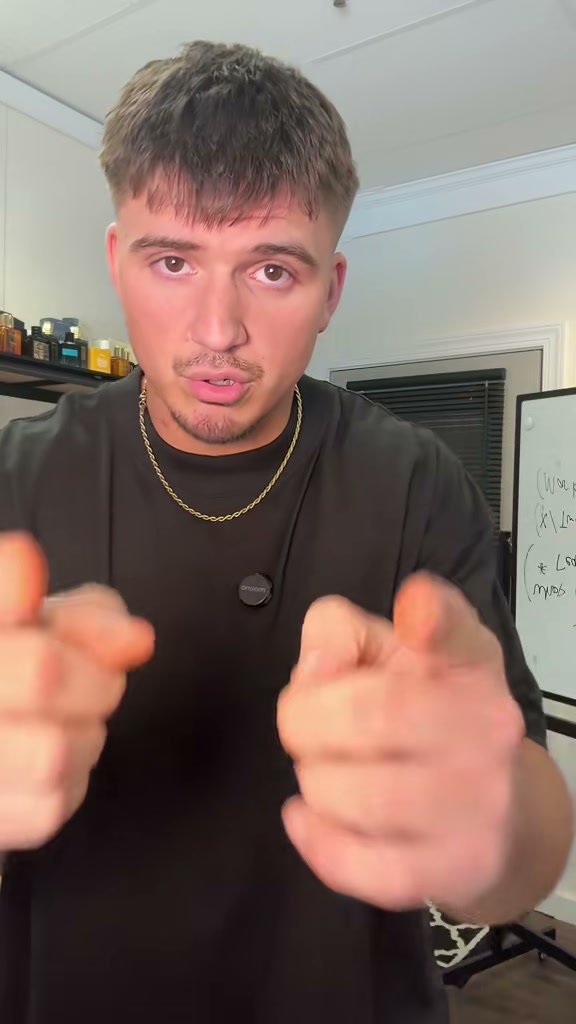
The closing turns the demonstration into a next step.
The forecasts in the narration remain the creator’s predictions. What we can inspect is the sequence of appearance changes and how the video presents them.
For your own version, decide what the viewer should take away after the surprise. Once the image has made its point, give the closing a clear purpose.
Make the switch your own.
Start with a change your audience would care about.
A stylist could show one presenter in three original looks. A creator could introduce fictional characters for different parts of a story. A small brand could build a playful product scene around a change in appearance.
Keep your own setting, characters, and wording. Borrow the connection between the familiar scene and the unexpected change.
You can explore this kind of effect with Kabo’s video-generation feature. Plan the ordinary state, the reveal, and the useful second beat before generating the sequence.
Then review the details that connect the shots: the background, clothing, hands, product shape, and action around the transition.
A surprising change gets the idea started. Giving that change a purpose makes it worth building a video around.
Two prompts. Your own transformation.
Copy a prompt, open Kabo Web Agent, and paste it into a chat. Use the second prompt in the same conversation to build on the analysis.
View full prompt
Analyze this reference video:
https://www.tiktok.com/@gage_sampson/video/7681747661107563789

Inspect the actual footage before analyzing it. Do not infer visuals from the title, cover, description, or comments. If you cannot access it, tell me exactly what source material you need.

Give me:
1. A timestamped breakdown of the opening hook, on-screen text, appearance changes, framing, gestures, product example, supporting insert, and closing.
2. An explanation of what each reveal adds to the story.
3. Three techniques I can adapt into original content.
4. Any weaknesses I would inherit by copying the structure too closely.

Separate visible observations, spoken claims, and your interpretation. Use approximate timestamps unless exact edit boundaries are verified. Do not guess the original generation tool or settings.

If public performance data is available, include its source and retrieval date. Compare it with recent videos from the same account only if you can define the sample, exclusions, and calculation. Do not infer retention, conversions, sales, or a cause of virality.
View full prompt
Help me develop an original transformation video using the storytelling principles from this reference:
https://www.tiktok.com/@gage_sampson/video/7681747661107563789

My topic or product: [fill in]
My audience: [fill in]
My goal: [fill in]
What viewers should do afterward: [fill in]
My setting and available props: [fill in]
My footage or character references: [fill in, or write “none”]
Preferred length and platform: [fill in]

Use the verified analysis from this conversation. If it is unavailable, inspect the reference first and state any access limitations.

Propose three original concepts. Each should establish a familiar scene, introduce a meaningful visual change, and give a second beat a practical purpose. Use new wording, my own scenario, and original characters.

Recommend one concept and provide:
1. Three opening hooks.
2. A timed script with actions, framing, on-screen text, voiceover, reveal, and closing CTA.
3. A Kabo video-generation brief for each shot, describing the subject, action, setting, framing, and details that must remain consistent.
4. A review checklist for transitions, hands, clothing, background, and any product.

Label invented scenes as creative proposals. Do not invent product results or performance claims. Let me choose the concept before generating, and identify any missing reference material.
Source & timing
Original video and public figures: the linked TikTok ↗, retrieved October 30, 2026, at 03:03 UTC. The returned public counts were approximately 10.3M views, 869.3K likes, and 11.8K comments. These are a dated snapshot, not live counters. No recent-account comparison is included.
Visual analysis uses actual sampled frames and a timed caption track from the approximately 56-second video. Timestamps indicate observed moments, not exact edit boundaries. Continuous playback and independent audio listening were unavailable, so music, sound design, and seamless motion are not assessed.
The figures show the post’s scale. They do not establish why it performed, how long people watched, or whether it generated sales.