
The messy take won. By a lot.
You know that clip you almost delete because something went wrong? Yeah. That one.
In this comparison, the failed version hit 12.8 million views. The flawless one got 2.3 million. That’s about 5.6× as many views for the take that didn’t go to plan.
So before you reshoot everything, let’s look at what the “bad” take might actually be doing right.
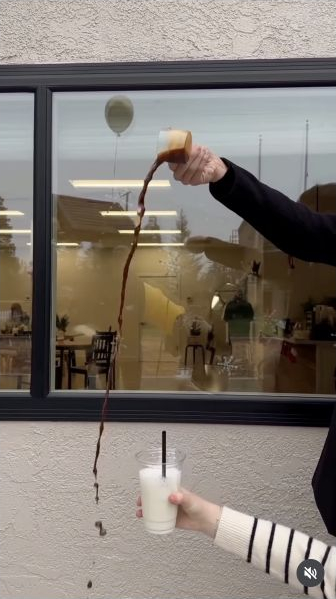
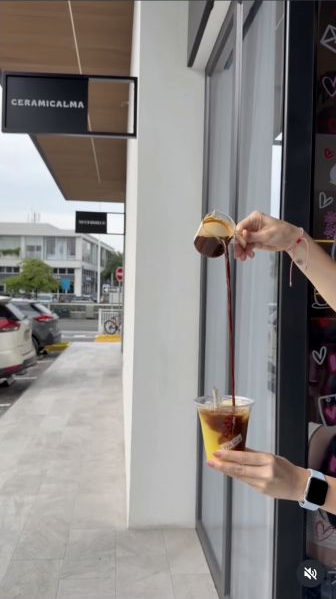
The point isn’t that every mistake deserves a million views. It’s that a clip can look less polished and still give people more to watch.
01. Perfect is easy to predict.
A clean setup. A smooth pour. Everything lands exactly where it should.
Nice? Absolutely. But once you’ve guessed the ending, what’s keeping you there?
A mistake opens the loop again. Suddenly, it’s “Wait, did that just happen?” followed by “Okay, what now?” That tiny unanswered question can be more interesting than a flawless finish.
Ask “What does the viewer still want to find out?” before you ask whether every frame looks perfect.
02. “Wait, what?” is a reason to stay.
Your feed has probably shown you a version of this format before. You recognize the setup. You think you know where it’s going.
Then something goes off-script.
Now you’re watching for the recovery. Will they save it? Laugh it off? Make it worse? The little detour gives a familiar format a story.
Random chaos isn’t automatically a hook, though. We need to understand what was supposed to happen before we can care that it didn’t.
Let us get the plan. Then let us see the plan fall apart.
03. The reaction is part of the story.
That half-second pause. The laugh they couldn’t hold in. The look at the camera that says, “Well, that happened.”
Those are the bits an over-polished edit can lose.
They let us meet the person behind the content. And when someone thinks “I’ve done that” or “This is so my friend,” they’ve got a pretty good reason to send it to someone.
For a brand, this matters too. Leave a little room for the person using the product to actually react to it.
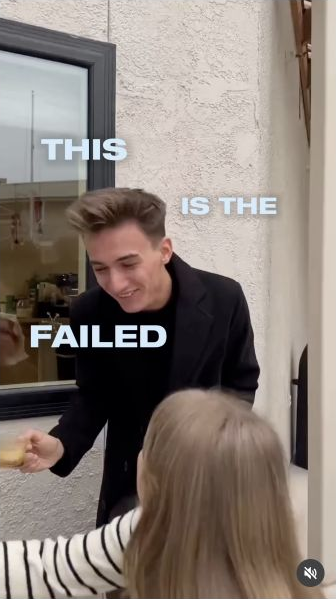
Sometimes, the mistake is the content.
The breakdown has a hook, too.
Notice how this explanation works? It gives you a result that feels backwards, makes you ask why, and then gives you a few reasons you can actually remember.
Start with the “that can’t be right” bit.
12.8M for the failed take. 2.3M for the flawless one. You’re already wondering why.
Ask the obvious question.
Why did the messy version do better? Now the numbers have somewhere to go.
Make the answer easy to follow.
Prediction. Surprise. Connection. Each one adds a reason to look at that imperfect clip differently.
Leave us with a line that sticks.
“Sometimes, the mistake is the content.” Something you can remember when you’re back in the edit.
Want to spot that kind of moment in your own content? Break down a video with Kabo Agent and look at its hook, pacing, and payoff. Start with the moment that makes you curious.
Okay, how do you actually use this?
Open your camera roll. Find a take you nearly deleted. Pick your format below and give it a second look.
Show the bit that went wrong.
If a failed step helps viewers understand the difficult part, make it part of the lesson. Show what went wrong, why it happened, and how to fix it.
A reason to keep watching, with something useful to learn.
Let the first reaction stay in.
Leave room for the hesitation of a first attempt, a discovery during use, or a natural reaction to the result. Those details can help viewers understand the actual experience.
Make the experience itself worth watching.
Your detour might be the story.
If a shoot, project, or challenge takes an unexpected turn, build the story around it. Every video doesn’t need a mistake. Look for the story in an unplanned moment that already happened.
Give viewers a reason to wonder how it ends.
Two prompts. Your next video.
Copy the analysis prompt into Kabo Agent to unpack this Reel. Then use the rewrite prompt in the same conversation to build something for your audience. Fill in the brackets before you send it.
Analyze this reference Reel:
https://www.instagram.com/reels/DdbHGa_PdbG/

Break down the opening hook, setup, unexpected turn, reaction, and payoff. Explain how the failed and flawless pours create different reasons to keep watching.

Use specific moments and timestamps where you can actually inspect the video. Separate what is visible from your interpretation. If the video is unavailable, tell me what source material you need instead of guessing.

Give me:
1. A beat-by-beat breakdown.
2. Three techniques I can adapt to my own content.
3. One thing this video alone cannot tell us about its performance.

Keep it practical. Don’t invent watch-time, retention, or conversion data.
Help me make an original Reel using the storytelling principles in this reference:
https://www.instagram.com/reels/DdbHGa_PdbG/

My topic or business: [fill in]
My audience: [fill in]
What I want the viewer to do: [fill in]
A real unexpected moment I can use, if any: [fill in, or write “none”]

Use the breakdown from our conversation if available. Otherwise, inspect the reference first and tell me if you cannot access it.

Adapt the structure: establish an expectation, create a reason to wonder what happens next, and deliver a payoff. Create new wording and a new scenario for my audience. If I have no real mistake to use, suggest an honest reveal or useful contrast instead.

Give me three opening hooks. Then choose one and write a 20–30 second script with shot directions, on-screen text, voiceover, and a closing CTA. Explain what you borrowed from the structure and what you changed. Don’t invent results or performance claims.
Before you hit delete…
Give that clip one more watch. Three quick questions:
If you’re nodding, maybe leave it in.
You don’t need to manufacture a fail. Just don’t edit out a good story because it wasn’t the story you planned.
View counts are the figures discussed in the Reel, not live metrics. They don’t prove that the mistake caused the gap; timing, distribution, and other factors can matter too.
Video: @swan.9046218 ↗. Stills: @thebranding.ai ↗. Breakdown and practical ideas by Kabo.