
A search result is a candidate, not a completed research report. We’ll walk through discovery, shortlist enrichment and supporting text before synthesis. A repair educator researching how to document a project is our example; the lesson itself will use their own photos and notes.
Kabo, an AI agent for creator research, provides candidate and shortlist tools. This recipe ends with a source dossier; transcript retrieval is a linked next step when the question needs it.
Start with the decision the dossier must support
We want to teach viewers how to document a repair so they can retrace it later. Before collecting anything, decide what a useful source must establish: what gets recorded, in what order, and how the notes stay connected to the repair.
The output is a source dossier, not a ranked trend board. It needs a scope note, accepted URLs, available evidence and unresolved method questions. We’ll build that document in Claude Code using Kabo’s discovery and enrichment tools, then leave deeper transcript retrieval to its dedicated guide.
Choose the client and confirm the connection
Connect https://kabo.sh/mcp-pub in a compatible client and complete Kabo sign-in. The MCP setup guide covers the connection; installation options are available for Codex and Claude Code.
This worked example uses Claude Code in a local content folder. If a Kabo connection is not already configured, add the remote server using claude mcp add --transport http kabo https://kabo.sh/mcp-pub, then use /mcp to complete sign-in and inspect its status. Keep a single intended Kabo connection rather than adding the same server twice.
claude mcp add --transport http kabo https://kabo.sh/mcp-pub
Prepare the question, scope and dossier folder
[ ] brief.md — Viewer question and what a useful reference must explain.
[ ] scope.md — Shared publication dates, language and video format.
[ ] reference-links.txt — Optional seed sources, with relevance notes.
[ ] owned-material.md — Our repair photos and documentation sequence.
[ ] research-state.md — Source URLs, retrieval dates and any returned job IDs.
Create a small collection plan and keep its receipt
In the worked Claude Code project, inspect the ready Kabo tools and their current inputs. The question is how public tutorials teach documenting a repair. Limit discovery to sources that explain the note-taking process, not every teardown that happens to mention a repair.
Retain the actual candidate-set handle and collection status. A partial collection can still be reviewed, but it is not a complete inventory.
Read brief.md and scope.md. Inspect the current schema for collect_youtube_trend_candidates, then collect a small relevant candidate set. Preserve the returned candidate_set_id, collection status, source identifiers and coverage notes. Show relevance for review before enrichment. Do not expand this topic search into a full channel-history claim.
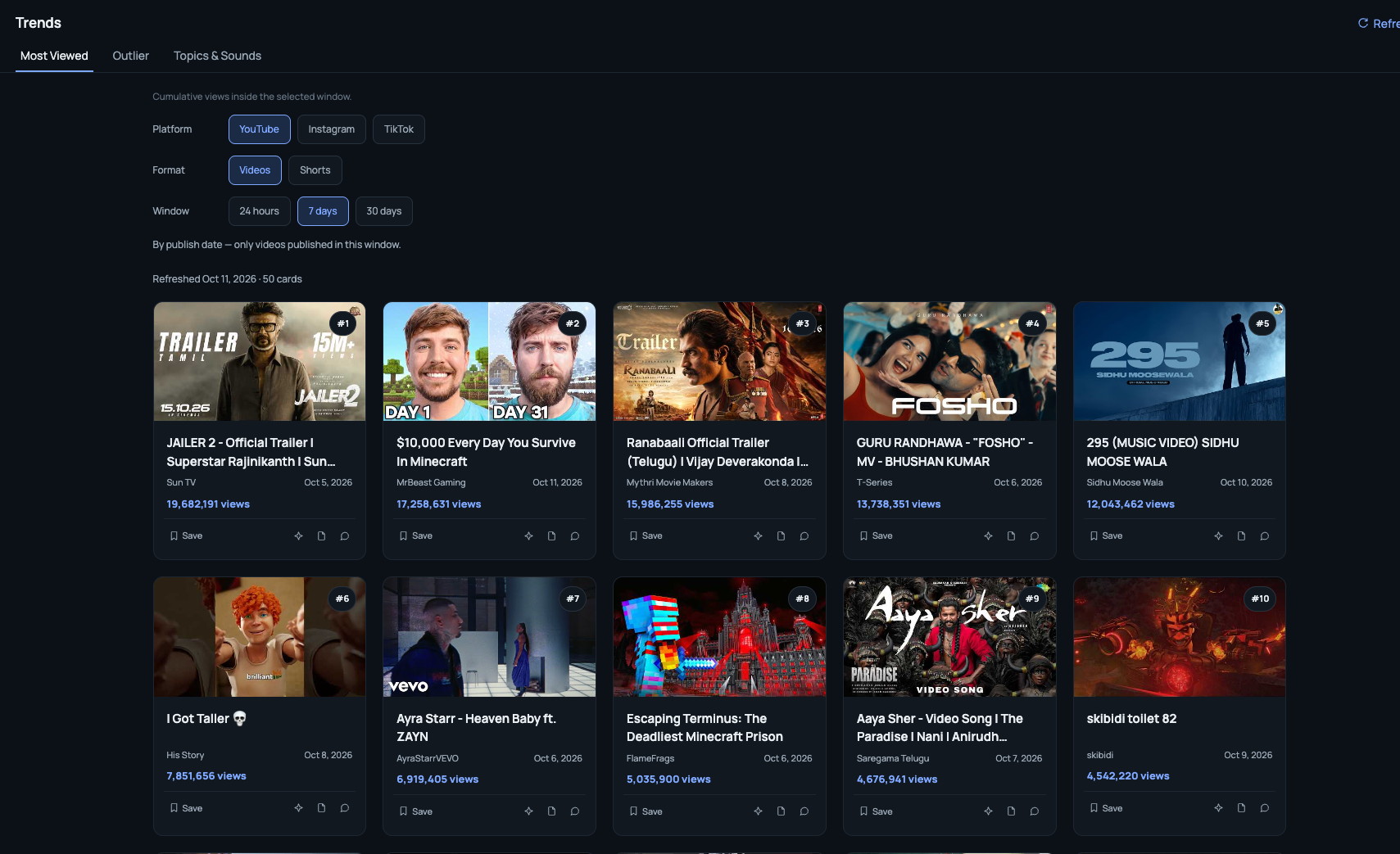
Carry the accepted identifiers into enrichment
The next call should enrich the items we accepted, not rebuild a shortlist from remembered titles. Use the returned candidate_set_id and content_key values with the current enrichment schema. Keep the same publication window.
After enrichment, retain available exact metrics, same-channel context and missing evidence. The source index exists so we can trace each report note to the accepted item.
Using the candidate_set_id and content_key values from the accepted collection, call enrich_youtube_shortlist with the required current fields. Keep the agreed dates and explain semantic relevance judgments separately from returned metrics. Save a source index containing URL, publication date, retrieval date, evidence available and coverage gaps. Do not invent identifiers or replace unavailable baselines.
The dossier should show coverage before conclusions
For the repair-documentation question, a useful authored report shape is:
- Scope: teaching how to record a repair process; actual dates and format from the brief.
- Accepted sources: actual URLs and why they belong.
- Coverage: collection status, included items and known gaps.
- Supported notes: what metadata or retrieved supporting evidence establishes.
- Next evidence needed: which source requires text or visual inspection before we describe its method.
A title about careful repair is not enough to establish the documentation sequence.
Request supporting text only for the remaining question
If the method depends on the speaker’s explanation, continue with the transcript recipe. That guide owns the data-job and artifact-reading sequence.
Here, mark the source as awaiting that evidence and keep the supported metadata notes. We do not need to repeat the retrieval lifecycle inside this discovery-and-shortlist recipe.
Write a source dossier the next step can use
Ask the assistant for a short report tied to the accepted source index: what is relevant, what the available evidence supports and what needs closer inspection. Stop before turning uncertain method notes into our own lesson. The creator can then choose whether to inspect a source, collect more evidence or move to a brief.
Make the next run reproducible
Retain the brief, actual collection scope and source index in the folder. On a refresh, create a new dated file rather than replacing the old metric snapshot. Explain whether a different conclusion came from new evidence or simply different retrieval coverage.
The collection was partial and one accepted source lacks the supporting evidence needed to describe its method. Revise the dossier to state the actual coverage, retain supported observations and list the specific next evidence needed. Do not rerun discovery or fill the gap without a new scoped request.
Share the source dossier with its open questions
Review the source dossier in Google Docs. Use the transcript workflow for spoken-method evidence or the competitor workflow for a consistent channel comparison. The dossier records the source set for those next decisions.
Worked examples are illustrative. Product screenshots show existing Kabo web results, not a run of the example in this guide. Use your own materials and the evidence returned in your task.