
A tiny pickup line. Some very big numbers.
A public-data snapshot retrieved on November 4, 2026 reported approximately 73.7M views, 14M likes, and 50.2K comments.
Let’s look at how seven seconds of wordplay and facial performance come together.
01. Start with a straight face.
Around 0:01, the caption reads:
“please stay away”
Around 0:01.5–0:02.5, it becomes:
“from bakeries”
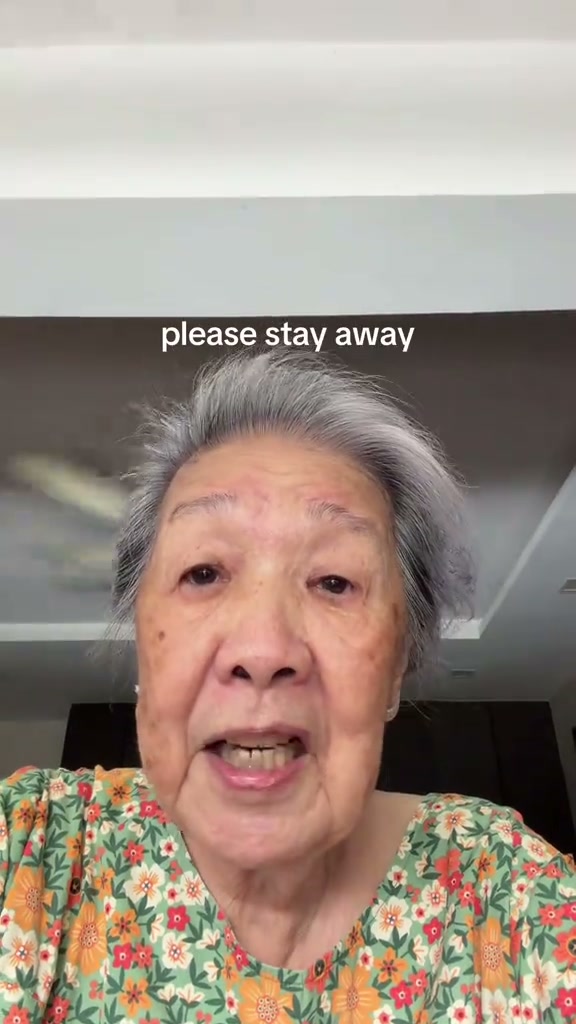
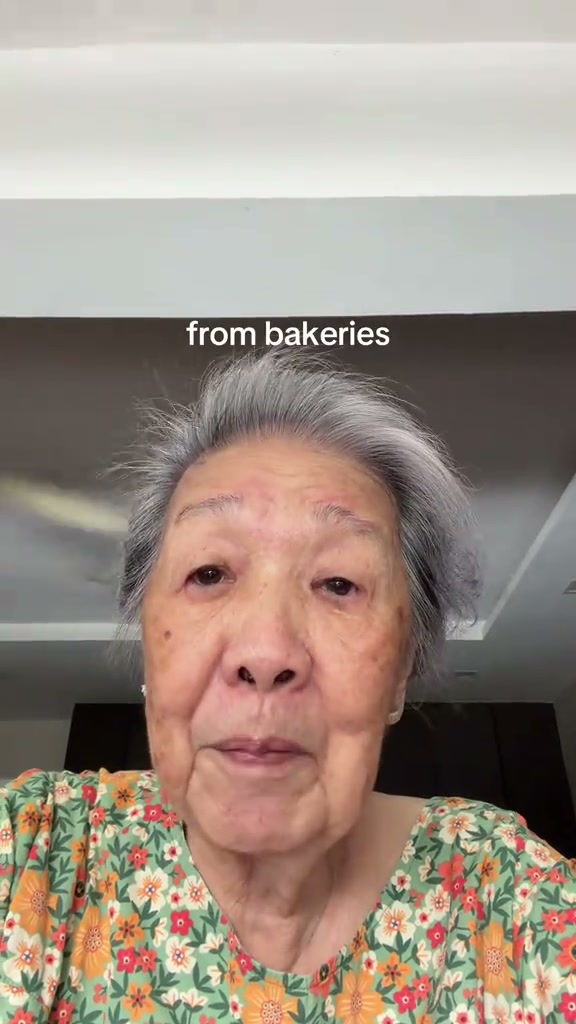
She faces the camera in a close-up. In the sampled image around 0:03, her mouth is closed and her expression is relatively restrained.
Very serious bakery business, apparently.
That restrained look gives the later expression something to bounce off. The opening reads like a warning, while the pickup-line setup is already a little silly.
For your own version, give your character a clear starting point. A calm face makes an exaggerated finish easier to notice.
02. Let the rizz load… 💬
Around 0:04, the caption reads:
“they might mistake you”
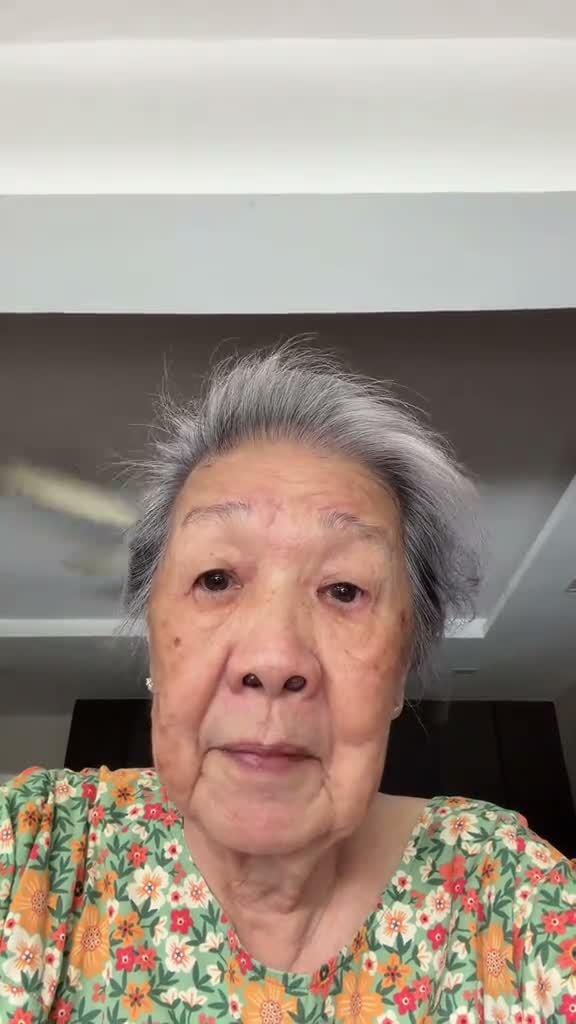
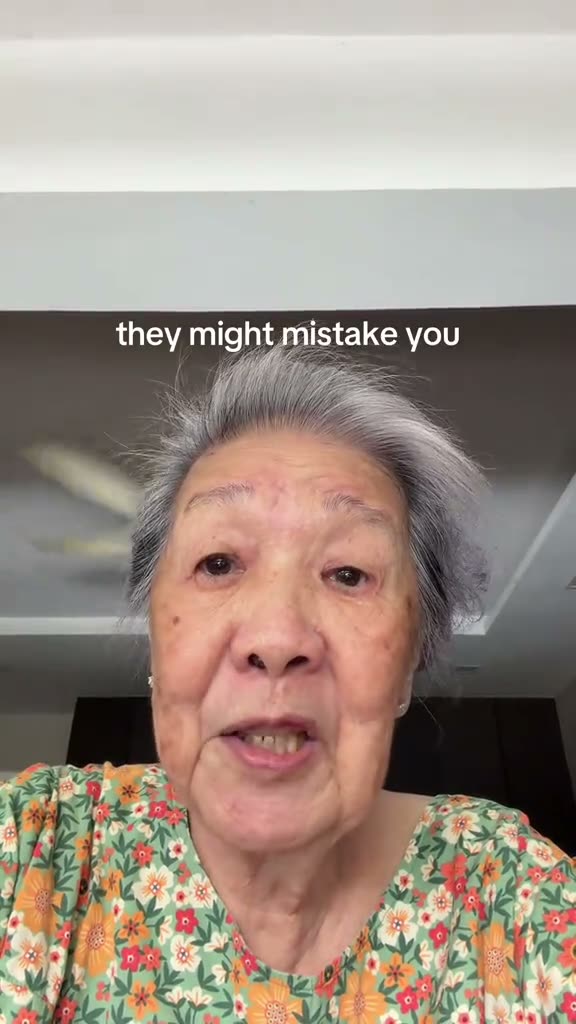
The white text appears above her head, one phrase at a time. Her face stays right there with it.
If you recognize this kind of cheesy line, you might already be anticipating the ending. You can still enjoy watching her commit to it.
The captions carry the sentence. The performer gives it a personality.
Try giving your own character a specific way to approach the joke: extremely formal, completely earnest, or just a little too excited to deliver it.
03. The face is the bonus punchline 😭
Around 0:05–0:06, the caption reads:
“for a cutie pie”
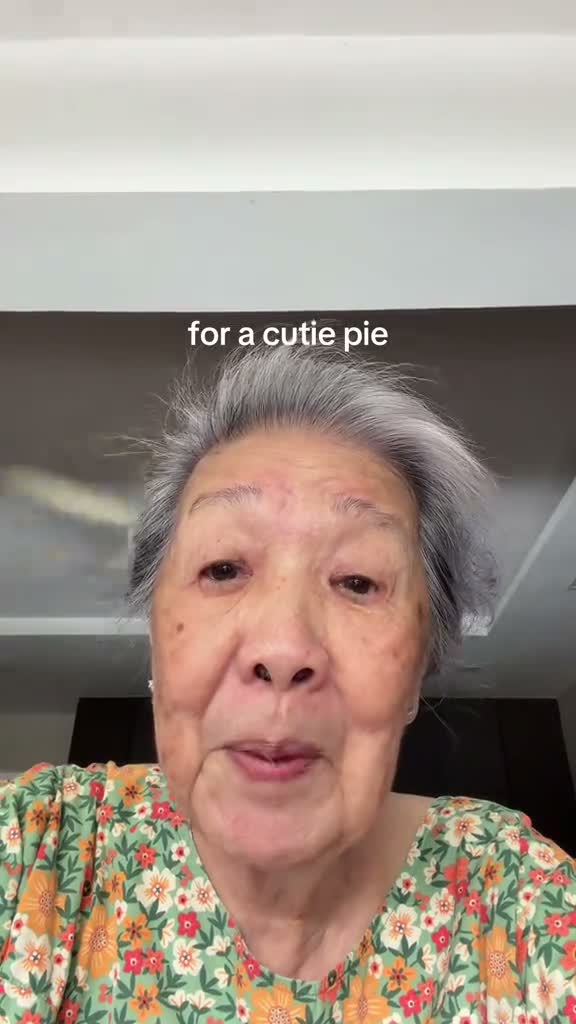
There’s the bakery connection. Cute little pun. Compliment delivered.
Then, around 0:06.3, her mouth is open and her tongue is out while the punchline remains visible. In the later sampled image around 0:06.8, the words are gone and the expression is still there.
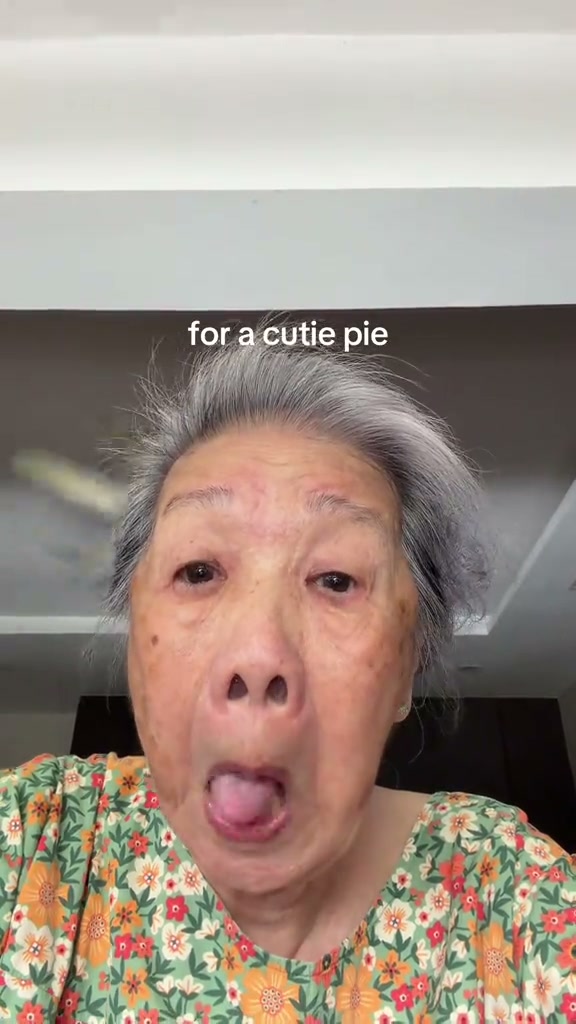
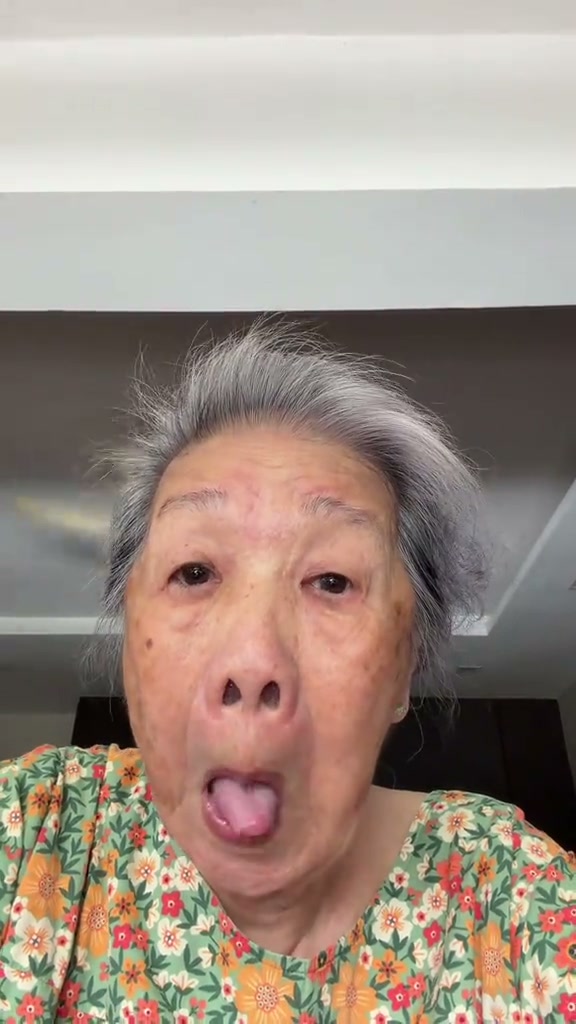
She’s giving the joke a whole extra facial expression.
My read: it has a goofy “you’re cute enough to eat” energy. The word pie gets a second, very unserious visual joke.
That’s an interpretation of the performance, rather than a statement of her intention. What we can see is the change from a restrained look to an exaggerated tongue-out face.
Let the final expression have its little moment. It’s part of the payoff.
04. A compliment you can outsource 💌
The post caption invites viewers to send the video to someone.
Which makes the clip a handy little delivery service for affection: send the video, let her handle the rizz.
The recipient gets a compliment and a ridiculous face. The sender gets to be sweet without writing a whole romantic speech.
A share count was unavailable, so we can’t measure how often viewers used it that way.
For your version, think about who someone would send it to—and what they’d be saying by sending it.
Make your own little comedy moment ✨
Start with a message your audience would enjoy passing along: a compliment, a friendly tease, or an excessively enthusiastic thank-you.
Then build three things:
- A comic persona: who’s delivering this, and how seriously are they taking it?
- A performance change: how does the face or body develop as the line unfolds?
- A final visual gag: what action gives the last words an extra meaning?
An original direction could be an extremely formal host delivering a tiny compliment like an important announcement, then visibly struggling to contain their excitement.
Write your own line. Give the character a reason to perform it that way. Keep the camera close enough for the expression to get its moment.
A little cheesy. A little dramatic. Very sendable.
Two prompts. Your own version.
Use the first prompt to analyze the reference. Use the second in the same conversation to develop and generate your original video.
View full prompt
Analyze this reference video:
https://www.tiktok.com/@ianthioo/video/7697839909842767111

Actually inspect the video before analyzing it. Do not infer its performance from the caption, thumbnail, comments, or search terms. If continuous playback is unavailable, identify the frames you inspected and the parts that remain unverified.

Analyze the relationship between the joke and the performance:
1. What the opening image and exact on-screen wording establish.
2. What kind of joke or pickup-line format the wording uses. Verify any claim that the exact line is established or widely used; otherwise leave that history unconfirmed.
3. How the performer looks toward the camera and how her expression changes.
4. What the captions contribute and what the performance contributes.
5. How the final words interact with the visible expression.
6. Whether the closing expression adds another visual joke after the verbal payoff.
7. How the post caption positions the video for its audience.

Use approximate timestamps beside concrete observations. Keep visible actions separate from interpretations such as “mock-hungry,” “flirty,” or “deadpan.” Do not treat those readings as proof of the performer’s intention. Assess vocal tone, pauses, music, or synchronization only if the audio can actually be verified.

Report available public metrics with their source, retrieval time, and precision. Do not infer retention, sharing behavior, conversions, sales, or the cause of the view count.

Finish with three transferable performance choices and the wording, persona, setting, and actions that an original adaptation should redesign.
View full prompt
Help me create an original short comedy video built around a cheesy compliment and a distinctive performance.

My brief:
- Topic or situation: [TOPIC]
- Intended audience: [AUDIENCE]
- Goal: [AFFECTION / APPRECIATION / COMMUNITY / BRAND AWARENESS / OTHER]
- Comic persona: [PERSONA]
- Tone: [PLAYFUL / WARM / DRY / OTHER]
- Language: [LANGUAGE]
- Target duration: [DURATION]
- Available presenter or footage: [MATERIALS]
- Brand requirements and boundaries: [REQUIREMENTS]

Use the reference analysis from this conversation as structural inspiration. Create a new line, situation, and performance. Do not reuse the bakery joke, “cutie pie” punchline, post caption, or reference performer’s likeness or voice.

Propose three original concepts. For each, explain:
- The message or joke.
- The persona delivering it.
- The change in expression or body language.
- The final visual action and how it connects to the words.

Choose the strongest concept and provide:
1. A complete script separating spoken words from on-screen captions.
2. A performance plan for the setup, transition, payoff, and closing reaction.
3. A visual plan covering the presenter, setting, framing, camera behavior, and readable text placement.
4. Approximate timing proposed for this new video, clearly separated from reference observations.
5. A fresh post caption suited to my audience and goal.

Make the humor come from the character’s behavior and interpretation of the line. Keep it affectionate and appropriate to the audience. Use an original fictional presenter or materials I have permission to use.

Use Kabo’s available video-generation tools to create the video. Keep the presenter and setting consistent, with natural facial movement and a clear change in expression. If exact caption rendering is unreliable, generate clean footage and provide a separate timed text-overlay plan.

If generation is unavailable, return the complete production-ready script, performance plan, visual plan, and generation prompts. State clearly that no video was generated. Do not promise views or engagement.
Source & timing
Source: the original TikTok by @ianthioo. Public metadata was retrieved on November 4, 2026, at 10:22 UTC+8. Counts are reported approximately at the precision returned.
The cited time points refer to same-source sampled frames, not exact expression onsets or caption-change boundaries. This breakdown analyzes visible performance and text; vocal delivery and music were not assessed.