
The references
Public Instagram counts checked on November 10, 2026:
| Reference | Likes | Comments | Shares |
|---|---|---|---|
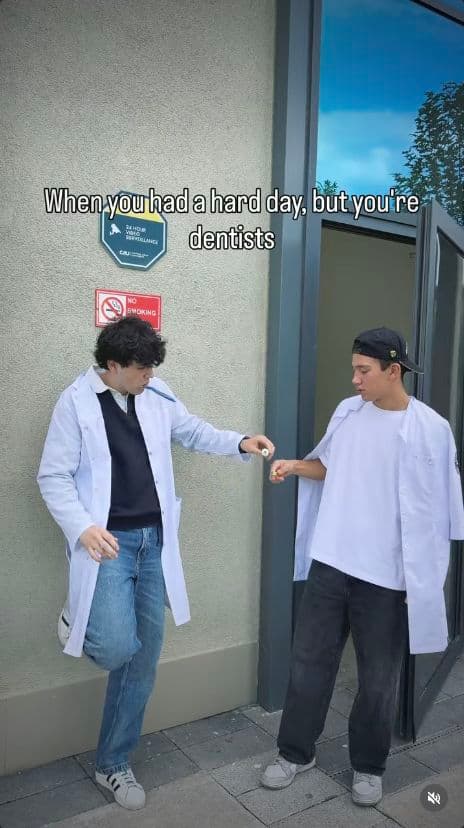
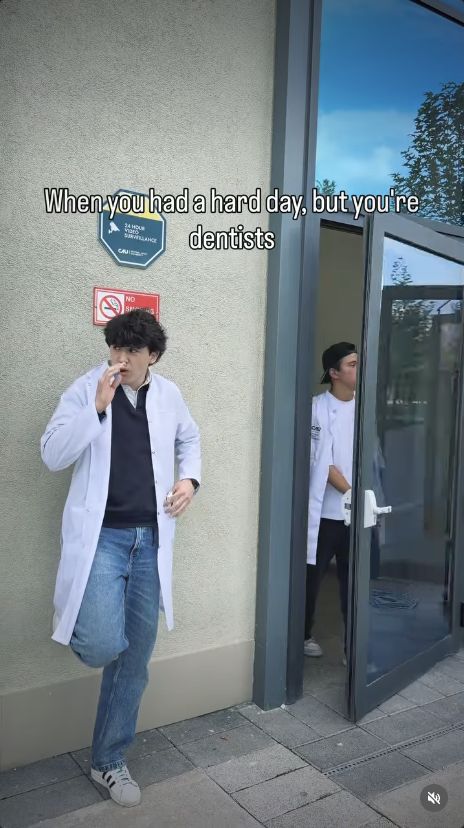
| @we.are.cau — the dentists’ break | 1.2M | 6,228 | 644K |
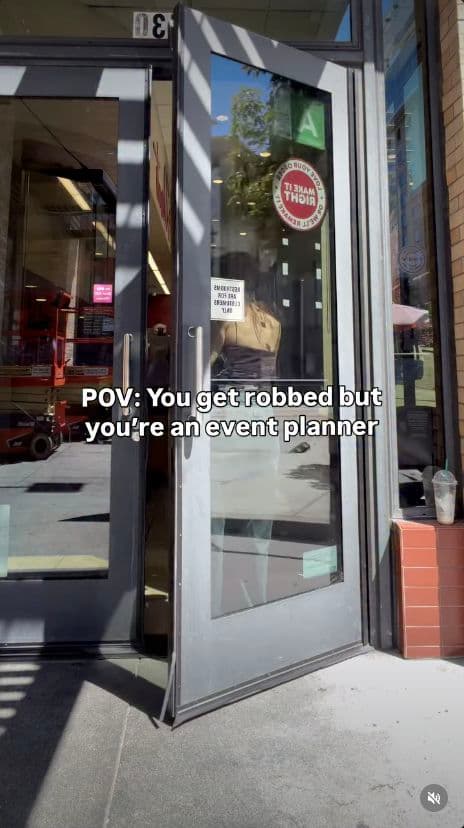
| @melissaandre — the event planner’s bag | 10.4K | 92 | 6,635 |
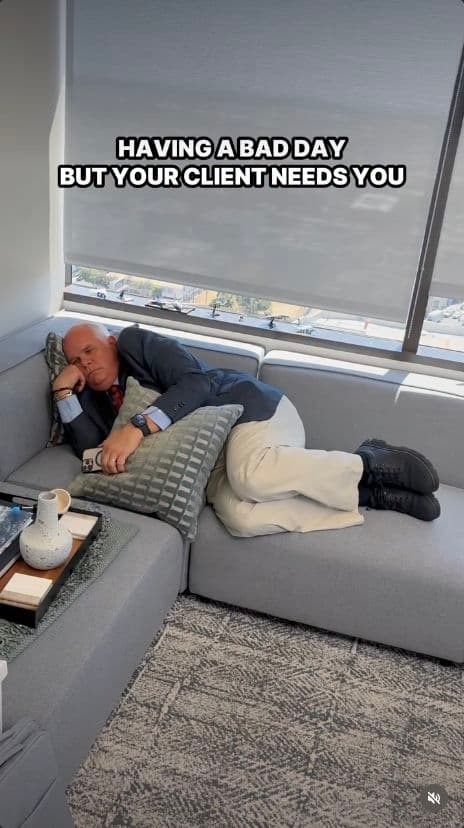
| @wisnerbaum — the client-facing switch | 45.8K | 278 | 32.1K |
Counts retain Instagram’s displayed precision. These are three selected examples; public view counts and comparable recent account samples were not verified.
01. Give people a work detail they recognize.
The opening text in each Reel tells us whose working life we’re entering.
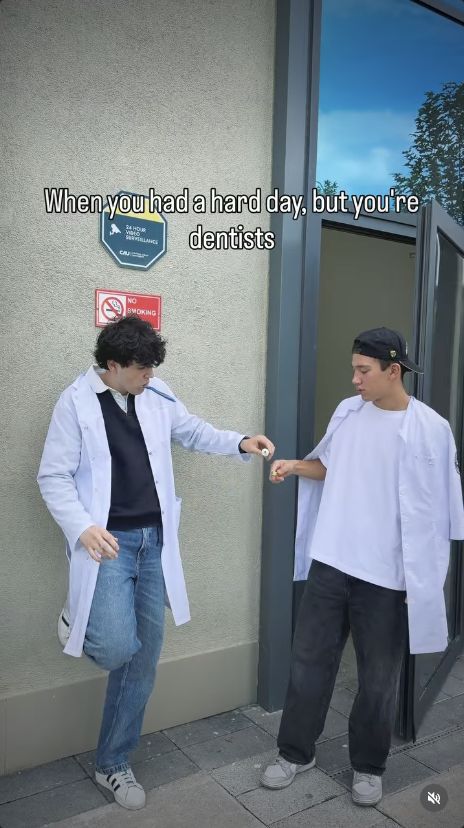
The dentists’ version reads:
“When you had a hard day, but you’re dentists”
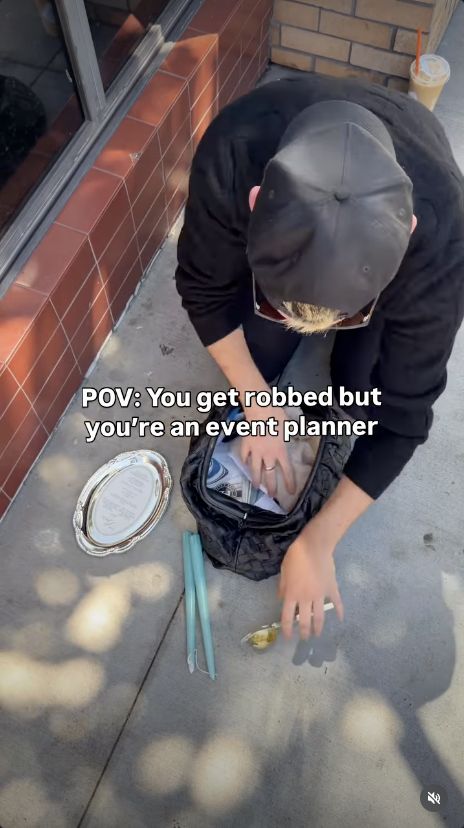
The event planner’s version reads:
“POV: You get robbed but you’re an event planner”
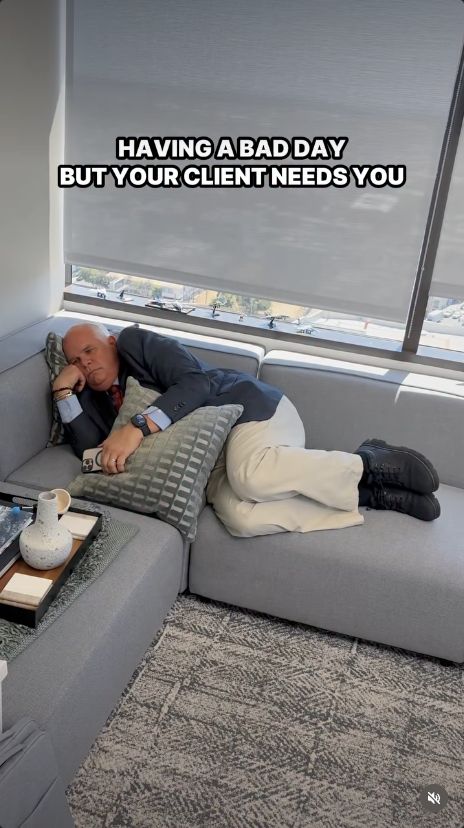
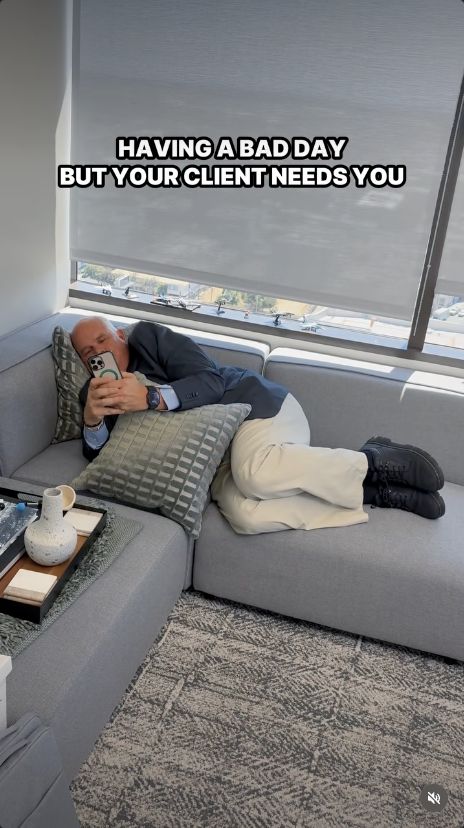
The client-facing version reads:
“HAVING A BAD DAY BUT YOUR CLIENT NEEDS YOU”
Each line connects an ordinary problem to a professional identity.
But the job title alone isn’t the joke. The joke comes from what we see next: the habit, the overloaded bag, or the expression someone can switch on for work.
That’s what makes this format useful for occupational self-roasts. It gives people a specific behavior to recognize in themselves.
Unfortunately, yes. That is us.
02. The dentists: even the break has become dental. 🪥
A man in a white coat comes through a glass doorway.
By approximately 0:03, he is outside with a toothbrush at his mouth, settling against the wall near a no-smoking sign.
The doorway, the leaning posture, and the hand-to-mouth movement suggest the visual language of a smoke break. The toothbrush gives that familiar scene its professional twist.
Rough shift. Needed a little enamel-care moment.
Around 0:08, a second man in a white coat comes out with another toothbrush. By approximately 0:13, they are outside brushing together.
The second person turns an individual habit into a shared workplace ritual. Apparently, this is what the group break looks like here.
The framing keeps the doorway, bodies, and toothbrushes readable together. The humor comes from the casual performance: they treat this oddly specific break as completely normal.
The self-roast: the profession has followed them outside, right into their downtime.
Borrow the idea: give a familiar off-duty behavior one unmistakable work-related detail. Choose something your audience would recognize before they’ve finished reading the caption.
03. The event planner: the bag is basically a second office.
At approximately 0:02, a person dressed in black reaches across the woman’s bag outside a storefront.
By around 0:04, the camera looks down at the person kneeling with the bag open.
Then the work kit starts coming out.
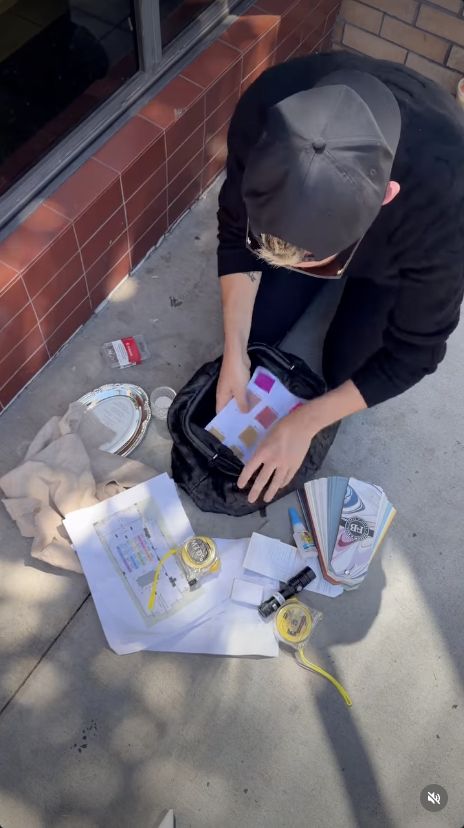
Around 0:08, printed sheets are being removed. By approximately 0:12, the area around the bag contains a printed plan, swatches, beige material, a silver-colored plate, and yellow tape measures.
The scene sets up a robbery, then spends its time revealing just how much work equipment this person carries.
Bestie stole tomorrow’s entire to-do list. 😭
The joke gets more specific as the objects accumulate. One item establishes “work stuff.” The growing pile makes the bag feel like a portable production department.
The downward camera angle matters here. It lets the viewer inspect the contents, so the props can do the talking.
The self-roast: work has taken over even the supposedly personal space inside your bag.
Borrow the idea: reveal a small collection of objects that says something painfully accurate about your job. Pick details with a story behind them—the emergency supplies, the backups, the thing you always swear you’ll stop carrying.
04. The client version: emotionally unavailable, professionally online.
This Reel makes its point in roughly seven seconds.
At approximately 0:01, a man is curled up on a gray sofa, his head resting on one hand and his phone lowered.
By around 0:03, he has raised the phone in front of his face and is smiling. His body stays curled up in the same spot.
Near 0:06–0:07, the phone comes down and the subdued expression returns.
With the opening text in place, that brief smile reads as the client-facing version of himself coming online.
The energy budget is gone. The service face has a separate power supply. ✨
The camera stays on the same scene. That makes the little expression change easy to compare with his posture and earlier mood.
Returning to the subdued expression completes the self-roast: being cheerful for work hasn’t magically fixed his day.
The self-roast: you can feel completely depleted and still produce a surprisingly convincing professional smile.
Borrow the idea: show the gap between how someone feels and the version of themselves they summon for work. A clear before, switch, and return can carry the whole scene.
05. Three different ways to say “this job has changed me.”
| Reference | The occupational truth being teased | How the video shows it |
|---|---|---|
| Dentists | Work habits follow you into your break | A familiar break-time pose, toothbrushes, and a colleague joining in |
| Event planner | You carry your working life everywhere | An increasingly specific pile of supplies |
| Client-facing switch | Professional warmth can outlast your actual energy | A brief smile between two visibly subdued moments |
These are affectionate little exaggerations of working life.
They let the creator be in on the joke. The audience gets to laugh with someone who seems to know the same habits, clutter, or emotional effort.
For an original version, start with a detail you can honestly roast about your own work.
“My job is stressful” is a broad statement.
“My emergency bag contains three tape measures” gives you a scene.
Find your own “why are we like this?” moment.
Think about what your work has quietly trained you to do.
What do you carry everywhere? What do you notice that nobody else notices? What expression do you put on? What habit survives long after you’ve clocked out?
For example:
- A designer tries to enjoy a café, then gets distracted by the spacing on its menu.
- A baker opens a “just the essentials” bag and keeps pulling out increasingly specific decorating tools.
- A creator looks exhausted, spots the recording light, delivers one bright sentence, then immediately slumps again.
Choose one honest detail and exaggerate it just enough to make the pattern obvious.
Then let a prop, action, or expression demonstrate it. Keep the performance casual enough to feel like an observation someone from that world would make.
The target feeling is:
“I feel personally attacked. Sending this to the work group chat.” 💀💚
Two prompts. Your own version.
Inspect the references, then generate an original self-roast for your own working world.
View full prompt
Analyze these three Instagram Reels as examples of profession-specific self-roast humor:

1. https://www.instagram.com/reels/Dd_USkvtd-u/
2. https://www.instagram.com/reels/DdcYmoCSyNf/
3. https://www.instagram.com/reels/DcB-lIIqY5F/

Actually watch each video before analyzing it. Do not infer scenes from covers, captions, comments, or account names. If playback is unavailable, identify the inaccessible reference and tell me what video file or screen recording you need.

For each accessible video, provide:
- The duration and exact opening on-screen text.
- A timestamped account of visible actions, expressions, props, framing, and cuts.
- The specific professional habit, burden, or contradiction being teased.
- The visible evidence supporting that interpretation.
- How the joke develops and how the ending pays it off.

Use occupational self-roast as an analytical lens, not a conclusion to force onto every scene. Separate what is directly visible from your interpretation. Mark approximate timings as approximate.

Compare how the videos make their jokes. Pay attention to prop substitution, accumulating work supplies, casual body language, and switching between personal mood and professional presentation wherever those devices are actually visible. Explain the differences instead of repeating one analysis three times.

Analyze audio or dialogue only if you can actually access it. Do not invent spoken lines, phone functions, editing methods, or generation tools.

Report public metrics only when directly verified. Include the source URL, retrieval date, metric label, and displayed precision. If making an account-relative comparison, state the sample size, publication dates, exclusions, missing values, and calculation method. Otherwise omit it. Do not infer retention, conversions, revenue, or sales.

Finish with:
1. A concise explanation of the shared self-roast idea.
2. What makes each example specific to its working world.
3. Three original adaptations built around recognizable professional details, each with an opening line, visible action, and payoff.

Keep the distinction between affectionate insider humor and a generic job stereotype clear.
View full prompt
Help me develop and generate an original short comedy video that affectionately roasts my own profession or working life.

Use these references for structural inspiration:
https://www.instagram.com/reels/Dd_USkvtd-u/
https://www.instagram.com/reels/DdcYmoCSyNf/
https://www.instagram.com/reels/DcB-lIIqY5F/

My brief:
- Profession, role, or niche: [FILL IN]
- Target audience: [FILL IN]
- Goal: [entertain peers / build recognition / introduce my business / other]
- Platform: [Instagram Reels / TikTok / YouTube Shorts]
- Desired duration: [FILL IN]
- A real habit, inconvenience, or contradiction in my work: [FILL IN]
- A specific example from my own experience: [FILL IN]
- Recognizable work props or phrases: [FILL IN]
- Available characters and location: [FILL IN]
- Character images or other assets I am providing: [LIST OR NONE]
- Tone: [cute / affectionate / dry / chaotic / deadpan]
- Brand or product, if relevant: [FILL IN OR NONE]
- Language: [FILL IN]
- Audio preference: [sound-off readable / sound effects / music / dialogue]
- CTA, if needed: [FILL IN OR NONE]

Inspect accessible references first. If they are unavailable, state that limitation and develop ideas from my brief without inventing observations about them.

Find the specific occupational truth inside my brief. Focus on a habit, object, or emotional switch that people in this field would recognize. Avoid generic claims that everyone in the profession behaves the same way. If the brief lacks a concrete detail, ask me one focused question before developing concepts.

Propose three original concepts. For each, include:
- The recognizable work detail being affectionately roasted.
- The exact opening on-screen text.
- The visible setup and payoff.
- Why this audience is likely to recognize the situation.
- The simplest way to stage or generate it.

Recommend the strongest concept for my audience and goal, then ask me to choose before generating.

For the selected concept, provide:
- A timed shot plan with framing, actions, expressions, props, and a clear final beat.
- Complete generation prompts for each required shot.
- Character, wardrobe, prop, and location continuity requirements.
- Text placement, editing rhythm, and sound choices.

Choose an execution that fits the joke: one revealing prop, a short sequence of work-related discoveries, an exaggerated habit, or a before-switch-return performance. Keep the humor grounded in my experience. Change the scene, wording, characters, and payoff rather than copying the references.

Then use Kabo's available video-generation capabilities to produce the selected version. Follow required generation confirmations and disclose unavailable capabilities.

Use vertical 9:16 framing, keep essential text inside platform-safe areas, and make the joke understandable with sound off. Give the audience enough time to recognize the work detail at normal playback speed. If a product appears, make it a natural part of the scene.

Deliver the generated video and a concise caption that extends the self-roast without explaining the entire joke.
Sources & timing
Sources: @we.are.cau, @melissaandre, and @wisnerbaum, checked November 10, 2026.
Time points are approximate browser playback positions. This breakdown covers visible action and on-screen text; audio was not assessed. The readings of the occupational humor are editorial interpretations of those observations.